

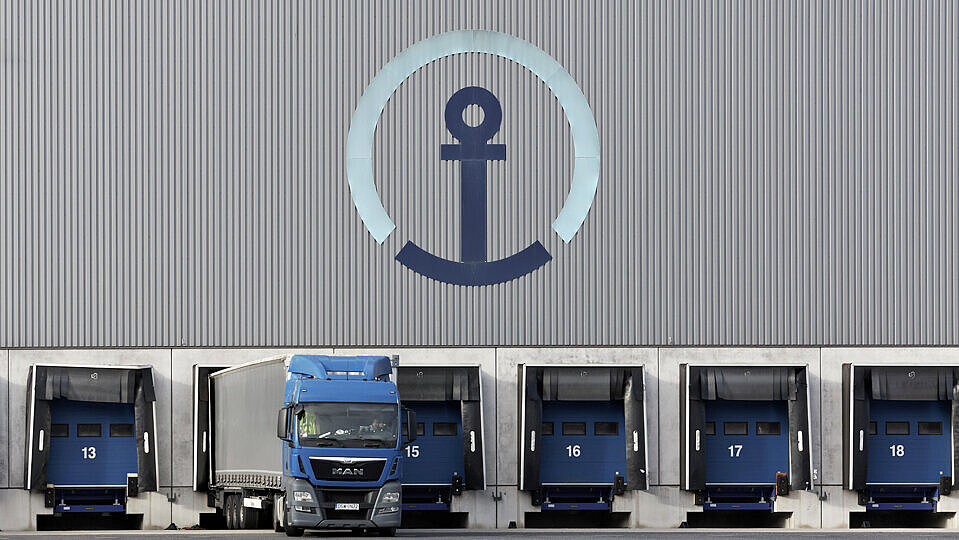
Kühne + Nagel overhauls road transport arm
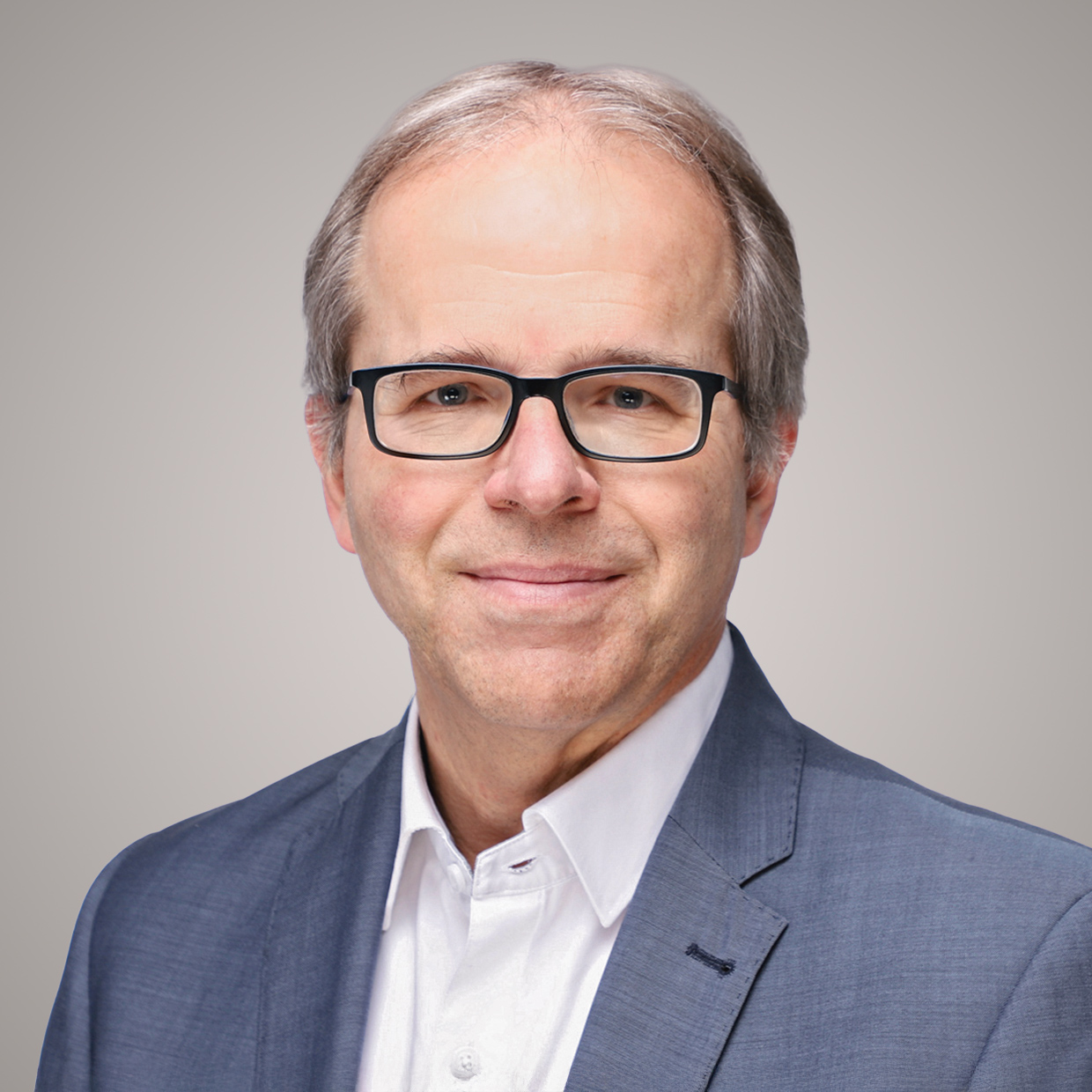
The appointment has attracted significant attention. Søren Schmidt, DSV’s long-serving head of land transport who left the Danish logistics firm following the Schenker takeover, has moved to rival company Kühne + Nagel (KN). After a compulsory one-year break, he has now been in post in Schindellegi for around 100days.
But what is the appeal of this career move for the 54-year-old? For one thing, he is impressed by how clearly the focus is on customers. Above all, however, he sees considerable potential to help shape the future development of road freight transport at KN. His key task is to significantly improve the margin in this division, as it “is not at the level it should be”.
A look at the latest financial statements of both companies highlights the ground that needs to be made up: whilst DSV’s EBIT margin remained consistently within a range of 4.6 to 5.3 per cent between 2020 and 2024, KN’s ranged from just 1.9 to 3.8 per cent – an average shortfall of nearly 2 percentage points. Even in 2025, when Schenker’s significantly poorer results had already been incorporated for part of the year, DSV’s figure stood at 3.5 per cent compared with 1.7 per cent for KN.
Schmidt is currently “still trying to work out” why this is the case. That is why it is not yet entirely clear to him “exactly which levers we need to pull”. But that is putting it very mildly. For one measure is clear: Schmidt wants to introduce the successful round-trip system – used primarily in Scandinavia – as a standalone product within KN’s European full and part-load transport operations.
In other words: KN is to offer European round trips that run on a regular basis. KN will then seek out suitable freight and allocate it to these routes. Until now, the process has been exactly the opposite: at present, KN seeks out the appropriate capacity on the market for individual consignments, order by order, as Schmidt explains. “For non-Scandinavian companies, this is quite a cultural shift,” explains the Dane.
“If you get it right, you can earn good money; if not, you can lose money too,” says Schmidt, drawing on his many years’ experience at DSV. Naturally, KN wants to get it right. To do so, it needs the right people in the right roles and a suitable technical platform to support them.
Sufficient load capacity available
The foundations for change are in place: “KN has the necessary cargo volume,” he realised. The main priority now is to find qualified staff who are proficient in this form of dispatch. He is therefore open to taking on new staff to prepare KN’s existing workforce in the various countries for the new system. Once a certain transaction volume is reached, artificial intelligence could help match loads with remaining capacity. The fact that KN already has its transport management system in the cloud is a huge advantage. However, according to Schmidt, human expertise is the decisive factor for success.
Ultimately, it is all about transport capacity. In this regard, Schmidt is not thinking in terms of the company’s own assets, but rather of carriers bound by fixed contracts. “We enter into fixed contracts for lorry capacity at our own risk,” he announces. These are based on a specific monthly mileage. KN dispatchers must ensure full utilisation. The company often deploys these lorries regularly on the same routes. The company mainly employs transport firms from Eastern European countries such as Romania, Bulgaria, or Poland. Schmidt does not reveal how many vehicles he plans to deploy under his own management; he considers this information too sensitive in the context of competition.
For him, the advantages are clear: on the one hand, there is less dependence on available capacity in the market and the fluctuating prices there. Furthermore, the routes are always the same. According to him, this has the advantage that capacity can still be filled with part-loads whilst en route, provided it cannot be fully utilised at the point of departure. And the longer the routes, the lower the cost per kilometre. “If we manage to utilise the lorries as efficiently as possible, then we’ll earn more than we do with the current approach – that is, putting individual loads out to the market,” he is convinced.
For the manager, the round-trip system represents a new product at KN. This complements existing services such as groupage freight, as well as those for specific verticals – such as healthcare or cloud infrastructure – which are aimed at particular target groups. The round-trip product is particularly attractive for high-value goods, given the complete control over both the load and the lorries. Schmidt is certain that the new system will be introduced. However, the land transport expert is not yet willing to reveal when the roll-out will take place.
Schmidt considers KN to be strongly positioned in land transport across Europe – with two exceptions: “I still see potential in Italy and Scandinavia,” he notes, even though KN is already represented there. Whilst he generally aims for organic growth, he is simultaneously keeping a close eye out for suitable acquisitions. He is not looking for large acquisitions, but rather “smaller ones that complement our core business”.
The groupage business would also benefit from this. After all, “for European tenders, we also need the appropriate network across the whole of Europe,” he says. European groupage transport remains the core business. It accounts for around 75 per cent of the shipment volume, although its share of turnover is significantly lower.
“We are 100 per cent committed to IDS”
He does not question the company’s membership of the German general cargo network run by the IDS cooperative, which Schmidt knows well from his time at DSV. “We have great confidence in IDS and are 100 per cent committed,” he assures us. “We need the network for our customers, and we can see that our IDS partners are also pleased to have us as part of the network.” He finds it “remarkable” how IDS has managed to fill the gaps caused by the loss of the seven DSV sites. “We are now in the process of stabilising quality and volume, and then we want to grow again,” says Schmidt, outlining the strategy. And what about the rumours circulating from time to time in the market regarding KN’s ambitions for acquisitions within the network? He himself has heard nothing of this and therefore cannot comment on it, he says, playing down the matter. However, if partners were to pull out, then KN, along with the two other major partners, Geis and Noerpel, would aim to ensure stability.
Even though Schmidt’s focus is currently very clearly on Europe, he has his eye on the other two major regions – North America and Asia-Pacific – where KN maintains strong road transport operations. In his view, both are major growth markets, in contrast to Europe. “There’s no doubt that we want to grow alongside them.” Here, too, the principle applies: preferably organically, but also through acquisitions where good opportunities arise.
Schmidt has now been in post for a good three months. Where does he see the division in three years’ time? Like the others, it is set to grow one and a half times as fast as the respective gross domestic product of the individual countries. “But for me, it’s not about whether we’re number three or number five or six in Europe in terms of size. What matters to me is quality, it’s about the customers, and of course it’s also about profitability.” Although, according to him, the specific figures have not yet been disclosed, “a margin of 3 to 4 per cent should be achieved on a consistent basis”. The round-trip system is set to make a decisive contribution to this. Shaping this transformation is a major incentive for him.